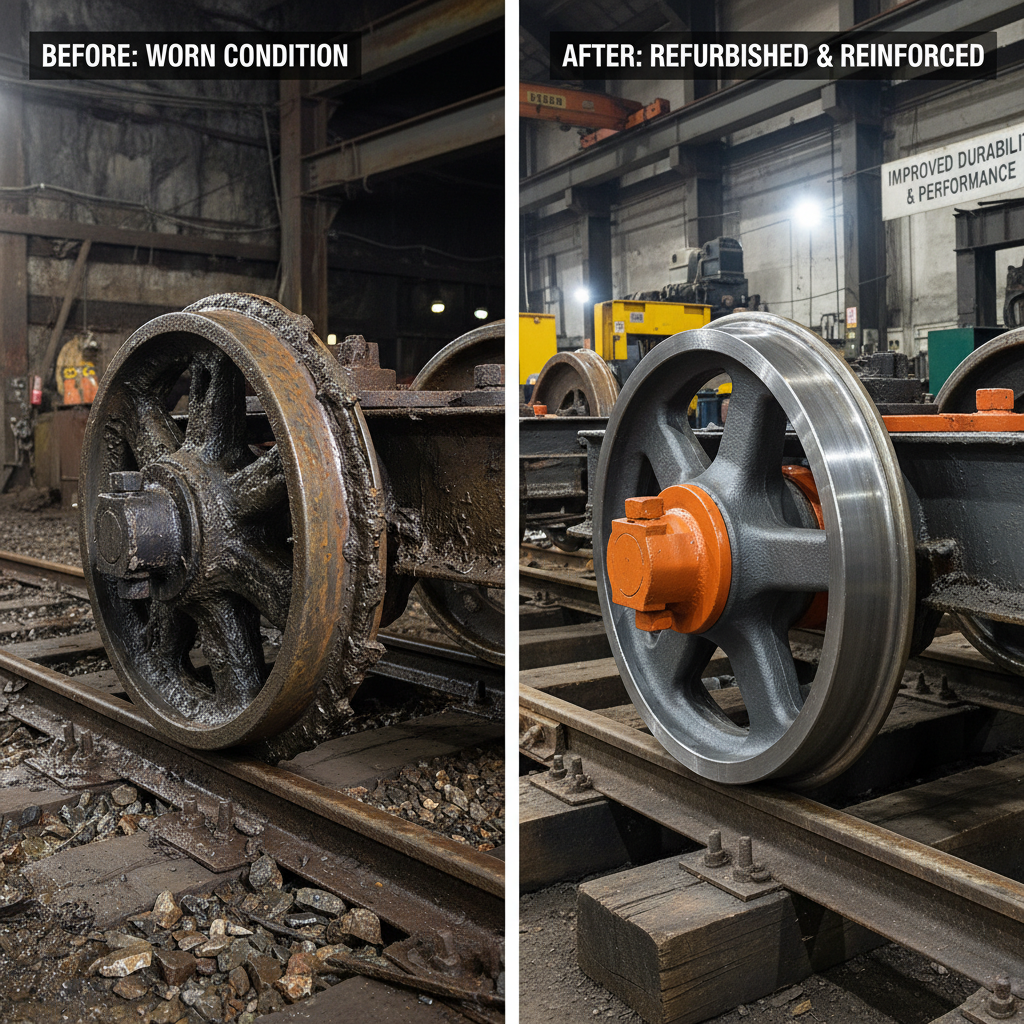
Crane wheel suppliers… honestly, it’s a world most folks don’t think twice about. But spend a year bouncing between construction sites, dodging rebar, and smelling diesel, and you start to notice things. These little guys – the wheels that keep everything lifting and moving – they’re the unsung heroes. Been seeing a lot of talk about higher load capacities lately, driven by these massive tower cranes popping up everywhere. And it's not just about bigger, it’s about smarter.
Everyone’s chasing lighter materials, trying to shave off weight, but the devil’s in the details. I encountered this at a factory in Jiangsu last time. They were boasting about a new alloy, claimed it was the future. Turns out, it corroded faster than a shipwreck in saltwater. You gotta test these things properly, not just in some sterile lab.
And let’s be real, a lot of these innovations are just marketing fluff. They look good on paper, but… well, we'll get to that.
The Current Landscape of crane wheel suppliers
Right now, you've got a few big players dominating the crane wheel suppliers market, mainly in Germany, China, and increasingly, India. The Chinese suppliers are getting really aggressive on price, which, let’s be honest, is both a blessing and a curse. Quality control can be a bit… inconsistent. But they're getting better. You’ve also got a bunch of smaller, specialized suppliers, especially for niche applications like port cranes or offshore platforms. These guys often focus on customization. The demand’s going up, driven by infrastructure projects across the globe, especially in Asia and Africa. It’s a good time to be a crane wheel supplier, if you can deliver.
What’s strange is, a lot of folks still rely on traditional steel alloys. There's a lot of inertia there. But the pressure's on to find lighter, stronger materials.
Design Pitfalls and Common Mistakes
So, you’d think designing a wheel is simple, right? Round thing that rolls. Nope. One of the biggest mistakes I see is underestimating the dynamic loads. People focus on the static weight, but what about the swinging, the impacts, the sudden stops? That puts a massive strain on the bearings and the wheel itself. Another issue is inadequate sealing. Dust, dirt, salt spray… they all get into the bearings and grind things to a halt. I've seen wheels seized solid after just a few months because of poor sealing.
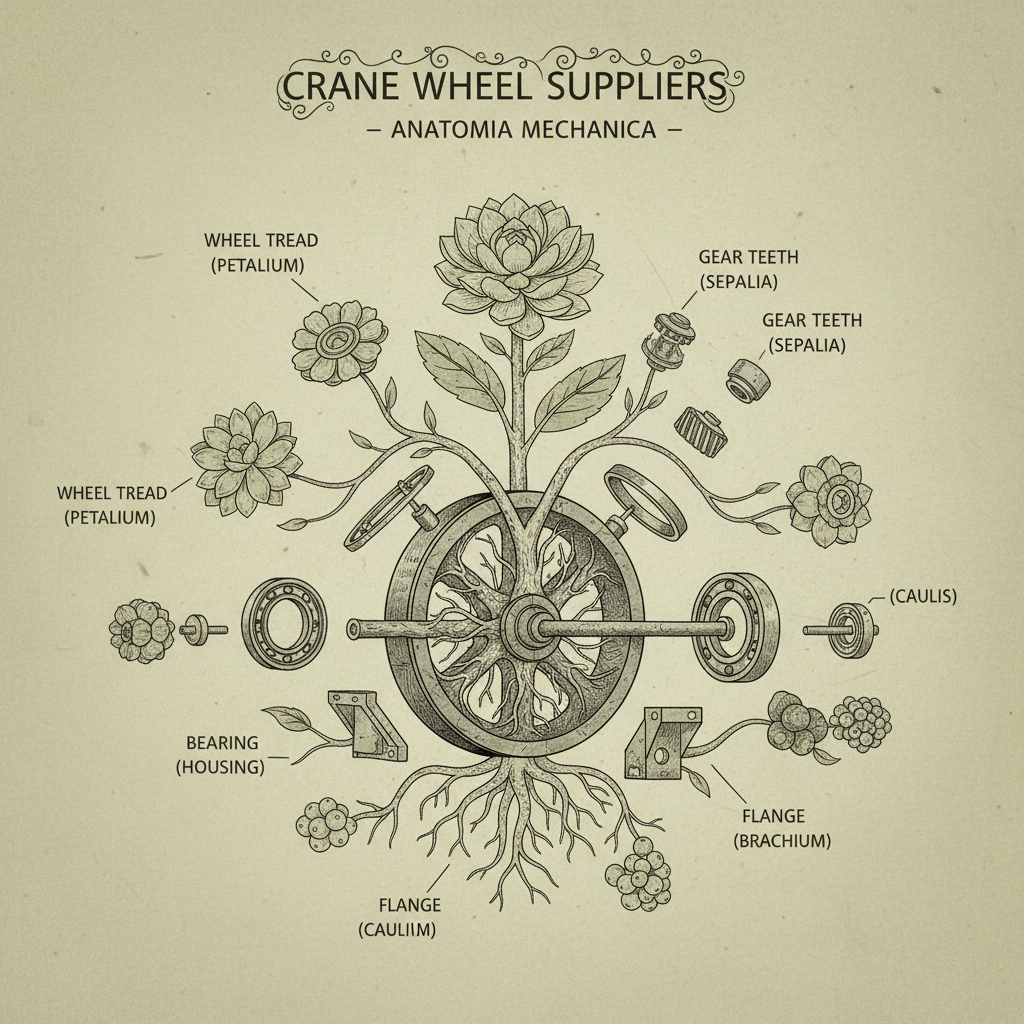
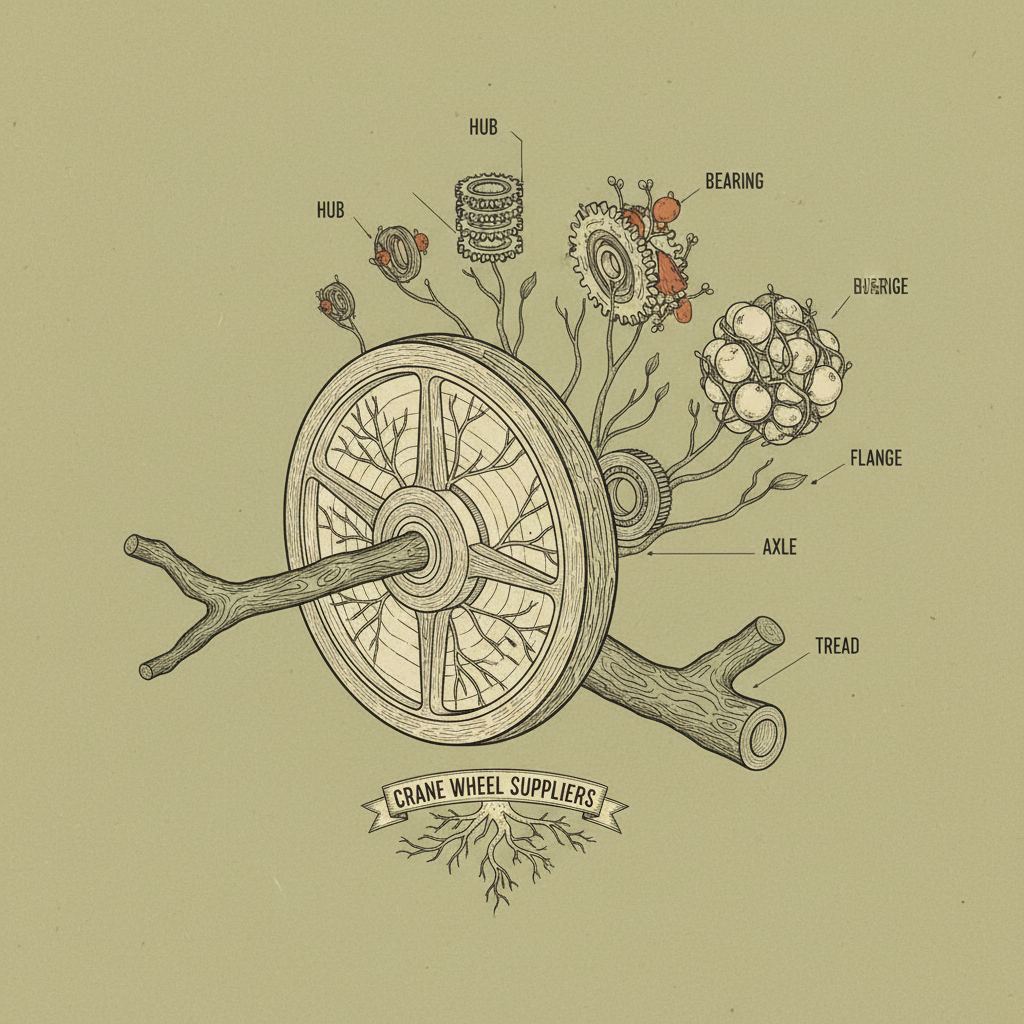
And then there's the flange design. Too thin, and it’ll deform under load. Too thick, and it adds unnecessary weight. It’s a delicate balance. And don't even get me started on the mounting interface. Get that wrong, and you're looking at a whole lot of headaches.
Anyway, I think a lot of engineers spend too much time in front of a computer and not enough time actually on a construction site seeing how these things really work.
Material Science: Beyond the Spec Sheet
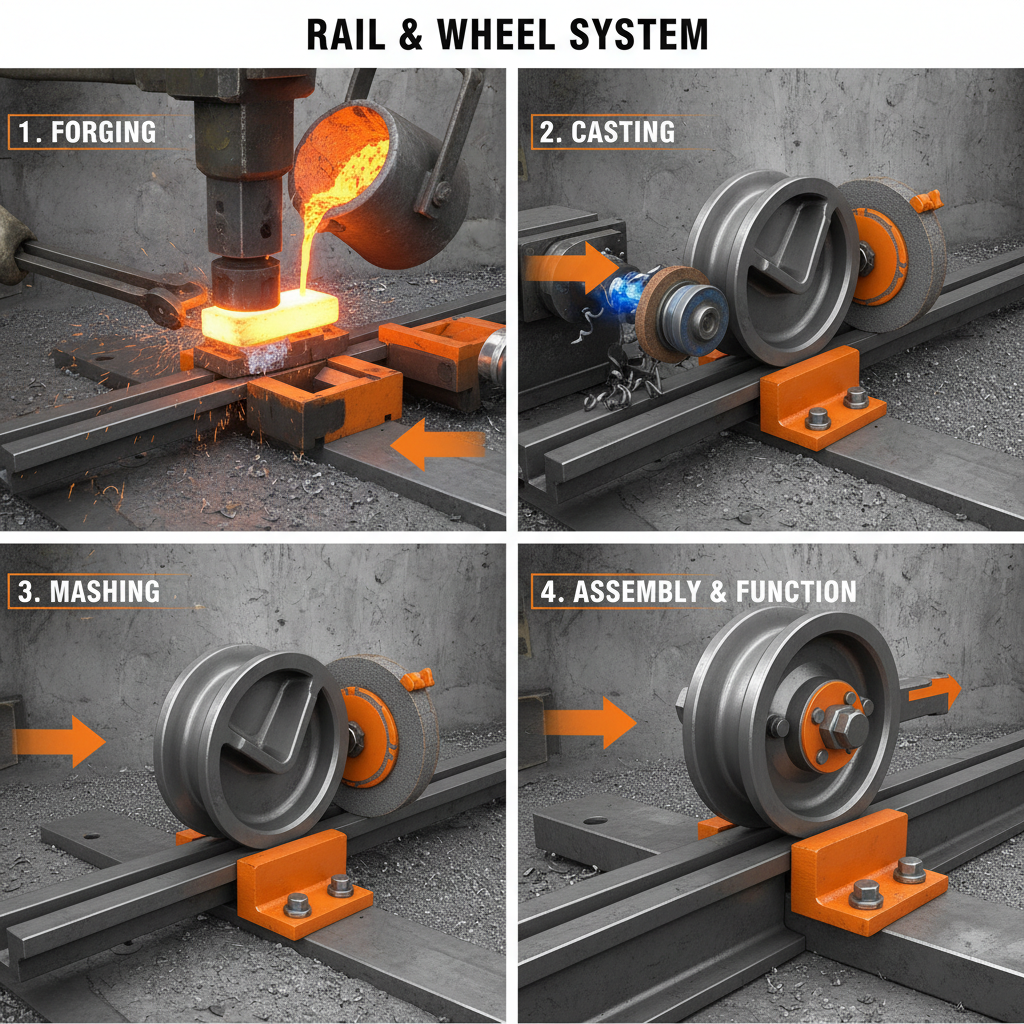
You’ve got your standard carbon steels, obviously. Then you move into alloy steels with things like chromium, manganese, and nickel for increased strength and wear resistance. But it’s not just about the elements themselves; it’s about how they’re processed. Heat treatment is critical. Get that wrong, and you can end up with a wheel that's brittle as glass. Have you noticed the smell when you’re near a forge that’s been working with these alloys? That metallic tang…it just tells you it's good stuff.
Then there are the newer materials. High-strength low-alloy steels (HSLA) are popular because they offer a good balance of strength, weldability, and cost. But they can be susceptible to corrosion if not properly protected. And then you’ve got the advanced stuff, like polymer matrix composites. Lighter, stronger, but… expensive. And getting reliable long-term performance data is still a challenge. I've seen attempts at using carbon fiber, but the delamination issues were a nightmare.
To be honest, the feel of the material is important, too. A properly heat-treated steel should have a certain…resonance when you tap it. It’s hard to describe, but you learn to recognize it after a while.
Real-World Testing and Performance
Lab testing is fine, but it doesn’t tell you the whole story. You need to see how these wheels perform under real-world conditions. I’ve seen wheels tested to failure on actual crane test benches, subjected to repeated cycles of loading and unloading, with varying speeds and loads. That's where you really find out what's weak.
One thing that's critical is testing for fatigue. You can't just load a wheel until it breaks; you need to see how it holds up over thousands, even millions, of cycles. And don’t forget about environmental testing. Salt spray, extreme temperatures, UV exposure… all of that can affect performance.
crane wheel suppliers Testing Parameters
How Crane Wheels are Actually Used
You wouldn’t believe the things I’ve seen. People using the wrong type of wheel for the application, overloading them, neglecting maintenance… it’s endless. A lot of times, the guys on site don’t even know what kind of wheel they’re using, they just know it needs to hold the load.
And often, they're modifying things themselves. Welding repairs, jury-rigged brackets… you name it. It’s a testament to human ingenuity, but also a recipe for disaster.
Advantages, Disadvantages, and Trade-offs
The advantages are obvious: smooth operation, reduced friction, increased load capacity. But there are downsides, too. Cost, for one. Good crane wheels aren’t cheap. And maintenance is crucial. Neglect them, and you're asking for trouble.
I think one of the biggest trade-offs is between weight and strength. Lighter wheels reduce the overall load on the crane, but they may not be strong enough for heavy-duty applications. It’s a balancing act. And there's always the issue of availability. Sometimes you need a specific size or configuration, and it takes weeks to get it.
Ultimately, it comes down to finding the right wheel for the job. There’s no one-size-fits-all solution.
Customization and Special Applications
You can customize pretty much anything on a crane wheel: diameter, width, flange height, material, bearing type. I had a customer last month, a small boss in Shenzhen who makes smart home devices, insisted on changing the interface to . Said it was “future-proof”. The result? The bearings didn’t fit properly, and the whole thing seized up after a week. Stubborn guy.
Special applications are where things get really interesting. We did a project for an offshore wind farm, where the wheels had to withstand constant exposure to saltwater and extreme weather conditions. That required a special alloy and a highly corrosion-resistant coating. And they had to be non-magnetic, to avoid interfering with the wind turbine's sensors.
Another example, a customer needed wheels for a mobile crane that was operating in a confined space. We had to design a wheel with a smaller diameter and a tighter turning radius. It took a lot of engineering, but we got it done.
A Simplified Summary of Common Customization Parameters
| Parameter |
Typical Range |
Impact on Performance |
Cost Factor |
| Diameter (mm) |
100-1000 |
Affects speed, load capacity, and clearance |
Moderate |
| Flange Height (mm) |
20-200 |
Provides stability and prevents derailment |
Low |
| Material Grade |
45, 65Mn, 4340 |
Determines strength, hardness, and corrosion resistance |
High |
| Bearing Type |
Ball, Roller, Tapered Roller |
Affects load capacity, speed, and smoothness of operation |
Moderate to High |
| Surface Coating |
Zinc Plating, Epoxy Coating, Chrome Plating |
Protects against corrosion and wear |
Low to Moderate |
| Wheel Width (mm) |
50-500 |
Affects stability and load distribution |
Low |
FAQS
Honestly, it's hugely variable. Depends on the load, maintenance, environmental factors. But ballpark, if you’re doing regular inspections and lubrication, you might get 5-10 years out of a good-quality wheel. But neglect it? You're looking at a much shorter lifespan, maybe a year or two. You’ll start hearing squealing noises, seeing cracks, that sort of thing.
Critical, absolutely critical. Without proper lubrication, you’re just asking for wear and tear. We typically recommend lithium-based greases for most applications. They offer good protection against water and contaminants. For extreme temperatures, you might need a synthetic grease. You have to follow the manufacturer’s recommendations, and re-grease regularly – at least every three months, more often if the crane is heavily used.
There are several telltale signs. Excessive noise, especially squealing or grinding. Visible cracks or damage to the wheel or flange. Uneven wear patterns. Difficulty turning. Wobbling or vibration. If you see any of these, stop using the crane immediately and get the wheel inspected. It’s not worth risking a catastrophic failure.
That depends on a lot of factors: the load, the operating environment, the speed, the duty cycle. For heavy loads and high-impact applications, you'll want a high-strength alloy steel. If you’re operating in a corrosive environment, you’ll need a corrosion-resistant material. And if you're looking for lightweight, you might consider a composite material, but be prepared to pay a premium. Consult with an experienced engineer to get the right recommendation.
The flange is what keeps the crane on the rails! It's the barrier that prevents the wheel from derailing. It needs to be strong enough to withstand lateral forces, and it needs to be properly shaped to ensure smooth contact with the rail. If the flange is damaged or worn, it can compromise the stability of the crane and create a serious safety hazard.
There are several relevant standards, including ISO 6934-1, DIN 15050, and ASME B30.9. Certifications like CE marking and TÜV are also important, as they demonstrate that the wheels have been tested and meet certain safety requirements. Always make sure the wheels you’re using are certified and comply with the applicable standards.
Conclusion
So, where does all this leave us? Crane wheel suppliers might seem like a small part of a much larger machine, but they’re absolutely critical for safe and efficient lifting operations. It’s about more than just specs and materials; it’s about understanding the real-world challenges faced by the guys on the ground, and providing them with reliable, durable components.
Ultimately, whether this thing works or not, the worker will know the moment he tightens the screw. If it feels right, if it runs smooth, then you’ve got a good wheel. If it doesn’t… well, you’ve got a problem. And if you’re looking for reliable crane wheel suppliers, feel free to visit our website: www.manufacturing-base.com