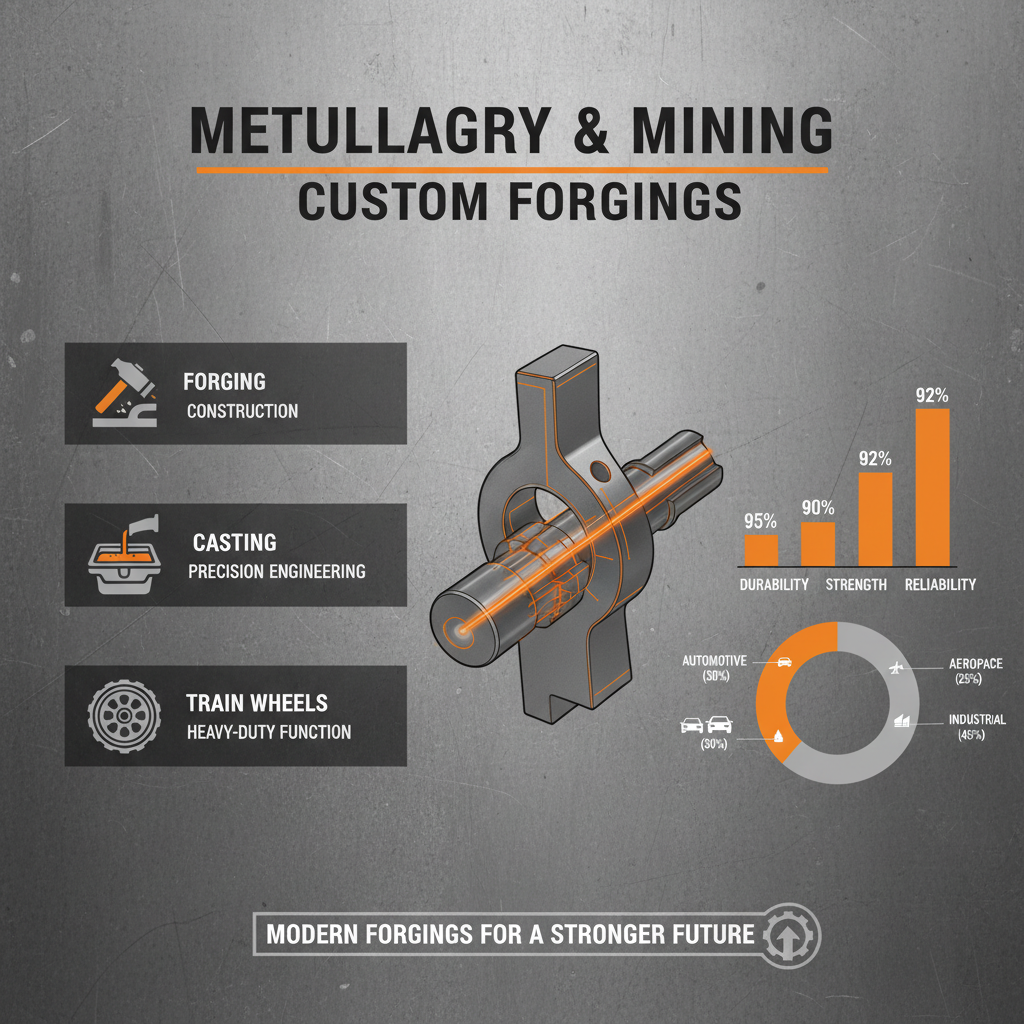
In the demanding world of heavy industry and automotive engineering, the reliance on high-performance structural components has never been greater. custom forgings represent the pinnacle of metalworking, offering a level of structural integrity and fatigue resistance that casting or machining alone simply cannot match. By manipulating the grain flow of the metal, forging creates parts that are inherently stronger and more reliable under extreme stress.
From the massive wheels of mining carts to the precision-engineered axles of heavy-duty trailers, the ability to tailor the mechanical properties of a part is critical. The global shift toward more sustainable and efficient transport systems requires components that can withstand higher loads with less material weight. This is where the strategic application of forged solutions becomes a competitive advantage for manufacturers worldwide.
Understanding the nuances of the forging process allows engineers to bridge the gap between theoretical design and real-world durability. Whether it is ensuring the safety of a rail vehicle or optimizing the lifespan of a coupling, investing in specialized forged components reduces long-term maintenance costs and prevents catastrophic failures in mission-critical environments.
Global Relevance of Custom Forgings
On a global scale, the demand for custom forgings is driven by the relentless pursuit of safety and efficiency in the transport and mining sectors. According to industry standards aligned with ISO quality benchmarks, forged components exhibit significantly lower porosity compared to cast parts, making them indispensable for high-pressure environments. As emerging economies expand their infrastructure, the need for heavy-duty rail wheels and trailer couplings has surged, pushing the boundaries of metallurgical science.
The primary challenge facing the industry is the balance between extreme durability and weight reduction. In an era where fuel efficiency and carbon footprints are scrutinized, manufacturers cannot simply make parts "thicker" to make them stronger. Precision forging allows for the optimization of geometry without compromising the internal grain structure, ensuring that critical components like drawbar eyes and axles can handle immense stress while contributing to overall vehicle efficiency.
Defining Custom Forgings in Modern Industry
At its core, custom forgings refer to the process of shaping metal using localized compressive forces. Unlike casting, where metal is melted and poured into a mold, forging manipulates the metal in a solid state (though often heated). This mechanical deformation aligns the internal grain structure of the material to follow the contours of the part, which effectively "locks" the strength into the shape of the component.
In the context of the automotive and heavy machinery sectors, this process is what separates a standard part from a high-performance one. For instance, a custom forged axle is not just a piece of shaped steel; it is a strategically engineered component where the metal's "fiber" is oriented to resist the specific bending and torsional forces it will encounter in the field. This level of customization is essential for specialized equipment like Road-Rail Vehicles (RRVs) and mine carts.
Beyond the technical definition, these components represent a commitment to reliability. In industries where a single part failure can lead to costly downtime or hazardous accidents, the "custom" aspect of forging ensures that the material grade, heat treatment, and final dimensions are perfectly synchronized with the operational environment, providing a tailored solution for the most grueling industrial tasks.
Core Factors Driving Forging Performance
The first critical factor is Structural Integrity. By eliminating internal voids and gas pockets common in casting, custom forgings provide a consistent density throughout the part. This uniformity is vital for components like crane wheels, which must support immense vertical loads without the risk of internal cracking.
Grain Flow Optimization is the second pillar of performance. During the forging process, the metal's crystal structure is physically moved. By designing the forging process so that the grain flows parallel to the principal stress direction, engineers can create parts that are exponentially more resistant to fatigue and impact than those machined from a solid block.
Finally, Material Versatility and Scalability allow for the use of high-alloy steels and exotic metals that are difficult to cast. Whether the application requires the extreme hardness of tool steel for rail wheels or the toughness of low-carbon alloys for trailer couplings, the forging process can be scaled from small precision parts to massive industrial axles, maintaining strict tolerances across all sizes.
Industrial Applications and Use Cases
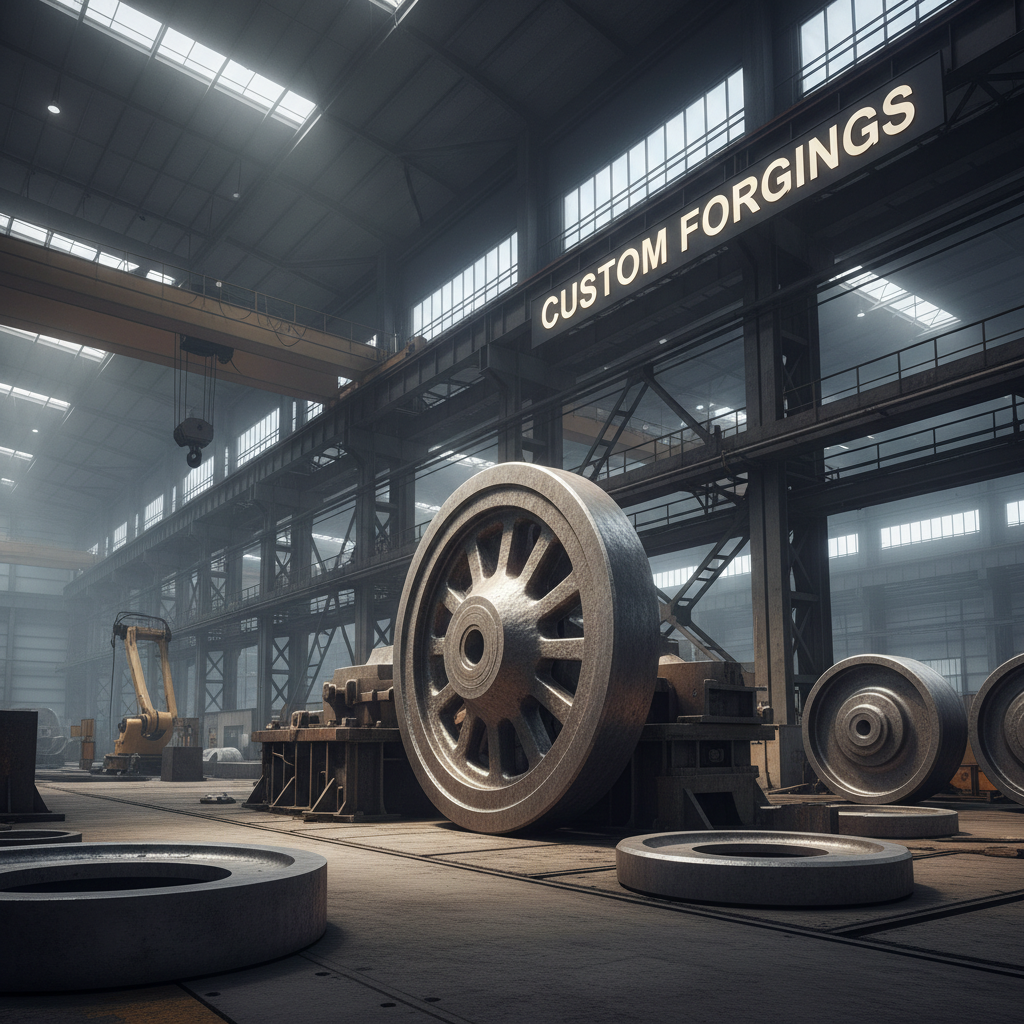
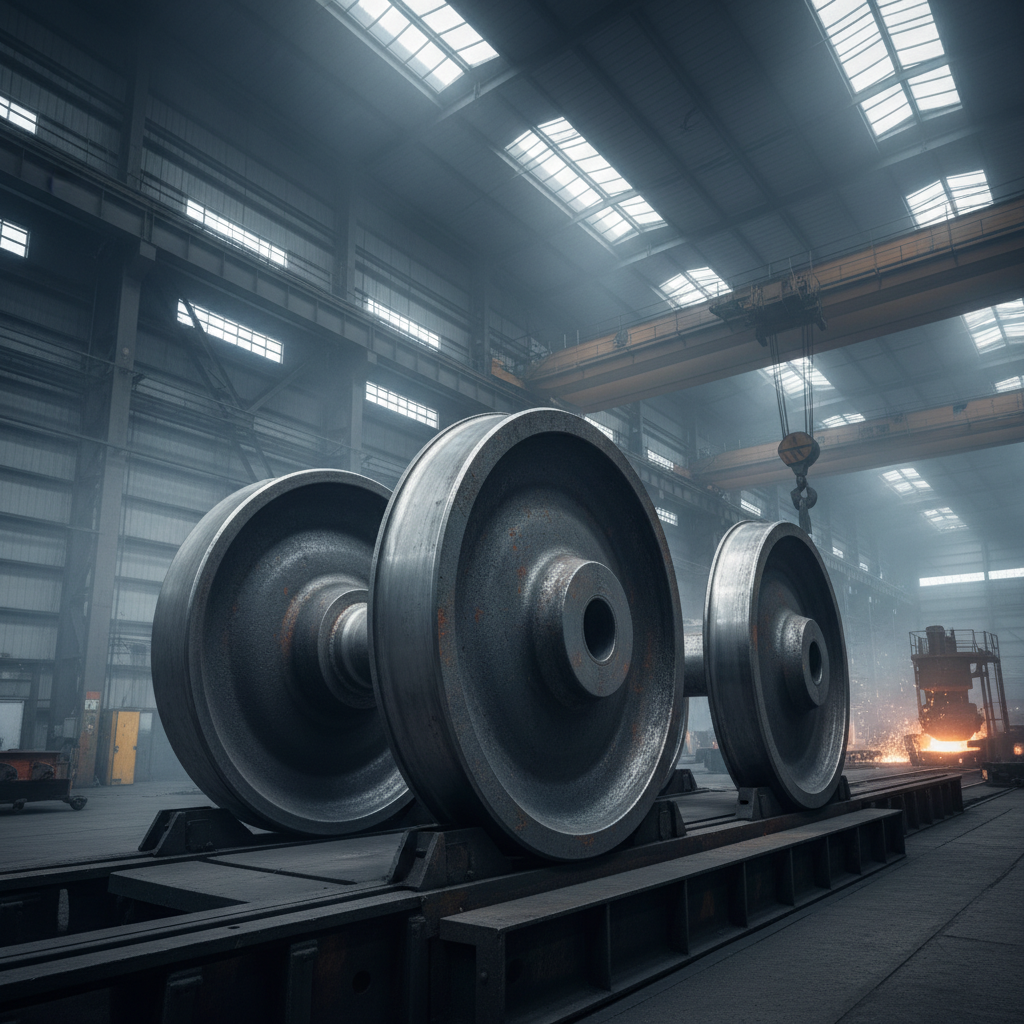
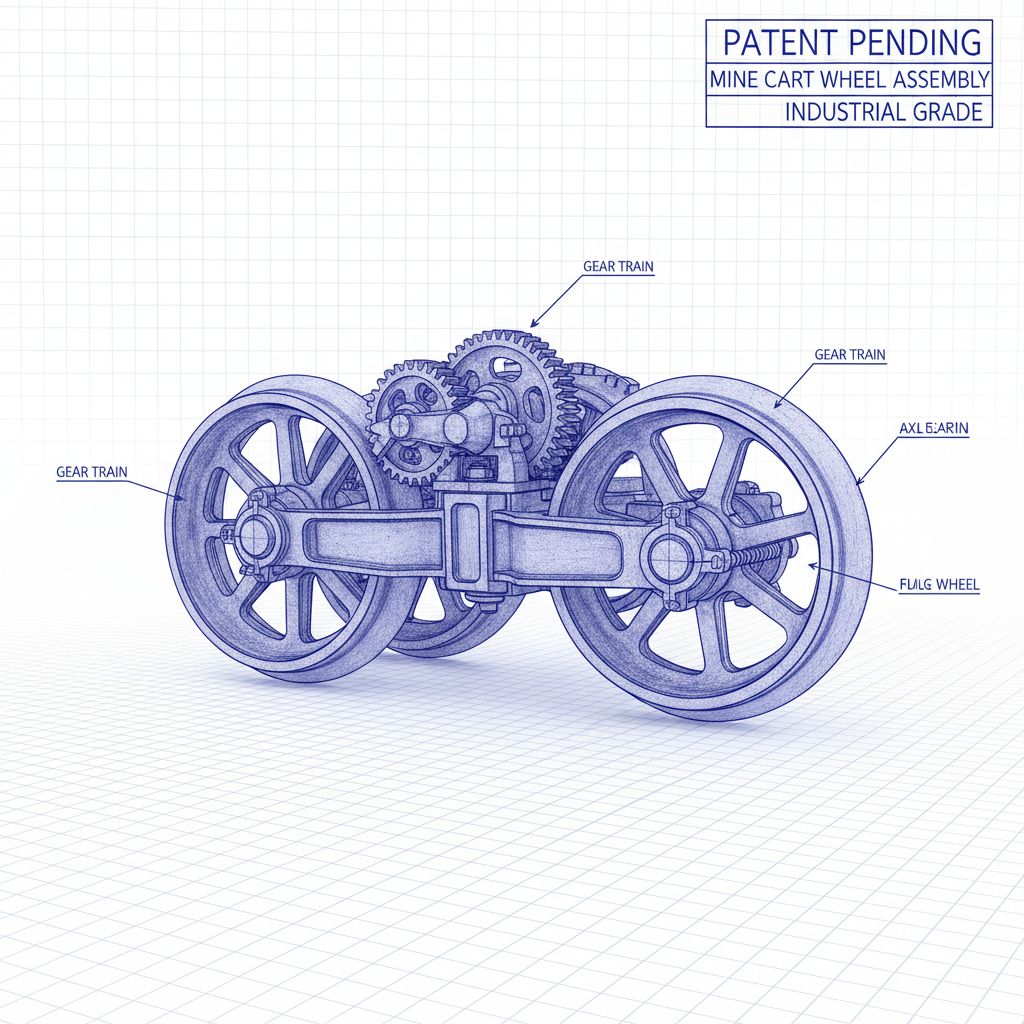
The practical application of custom forgings spans across the most grueling environments on earth. In the mining sector, mine cart wheels are subjected to abrasive terrains and crushing loads; forged wheels ensure these vehicles can operate for years without deformation. Similarly, in the railway industry, the wheels for Road-Rail Vehicles (RRVs) must transition seamlessly between asphalt and steel rails, requiring a level of precision and hardness that only custom forging can provide.
Beyond heavy transport, these components are critical in logistics and towing. Trailer couplings and drawbar eyes are the "silent heroes" of the supply chain, bearing the full tension of multi-ton loads. In remote industrial zones or post-disaster relief operations, where equipment is pushed to its absolute limit, the reliability of a forged coupling can be the difference between a successful mission and a costly equipment failure.
Comparative Performance of Forging Methods
Tangible Advantages and Long-Term Value
The most immediate advantage of custom forgings is the dramatic increase in the lifecycle of the component. While a cast part might succumb to fatigue cracks after a set number of cycles, a forged part’s optimized grain flow slows the propagation of these cracks. This translates to fewer replacements, reduced downtime, and a significantly lower total cost of ownership (TCO) for fleet operators and industrial plant managers.
Beyond the logic of cost, there is the emotional weight of safety. In applications like trailer couplings or crane wheels, the "cost" of failure is not just financial—it is human. The inherent reliability of forging provides peace of mind to engineers and operators, knowing that the components are designed to exceed the maximum expected load. This trust drives innovation, allowing companies to design more ambitious machinery knowing their structural foundations are secure.
Future Trends in Forging Technology
The future of forging is being shaped by the digital transformation of the factory floor. "Smart Forging" now incorporates real-time sensor data and AI-driven simulation to predict exactly how metal will flow during the press. This reduces material waste and ensures that every single part produced meets the same exacting standards, moving the industry toward a "zero-defect" manufacturing model.
Sustainability is also driving a shift toward green forging. The integration of induction heating—which is far more energy-efficient than traditional gas furnaces—is reducing the carbon footprint of custom forgings. Furthermore, the development of new, lightweight high-strength alloys is allowing for the creation of components that are even stronger than steel but significantly lighter, directly supporting the global move toward electrification in the automotive sector.
Automation and robotics are further refining the precision of the process. Automated trimming and CNC-integrated finishing allow forged blanks to be transformed into final products with micron-level accuracy. This convergence of traditional metallurgy and modern robotics is enabling the production of more complex geometries that were previously impossible to forge, opening new possibilities for custom axle and wheel designs.
Overcoming Challenges in Custom Forgings
One of the primary challenges in the industry is the high initial cost of tooling and dies. Creating custom dies for a specific part is a significant investment, which can make small-batch production expensive. To solve this, many manufacturers are adopting hybrid approaches, combining open-die forging for initial shaping with precision machining for final details, thereby reducing the need for complex, expensive die sets.
Another limitation is the lead time associated with high-quality heat treatment. Achieving the perfect balance of hardness and toughness requires precise temperature control and cooling cycles. By implementing automated heat-treatment tracking and digital twins, manufacturers can now optimize these cycles, reducing lead times without compromising the mechanical properties of the final product.
Finally, ensuring quality consistency across large batches requires rigorous testing. The solution lies in advanced Non-Destructive Testing (NDT), such as ultrasonic and magnetic particle inspection. By integrating these tests directly into the production line, manufacturers can guarantee that every piece of custom forgings is free of internal defects before it ever leaves the facility.
Analysis of Forging Solutions Across Different Industrial Components
| Component Type |
Primary Stress Factor |
Forging Method |
Durability Score (1-10) |
| Crane Wheels |
Vertical Compression |
Closed Die |
9.5 |
| Mine Cart Wheels |
Abrasive Impact |
Open Die / Ring Roll |
8.8 |
| Trailer Couplings |
Tension/Shear |
Precision Forging |
9.2 |
| Drawbar Eyes |
Cyclic Fatigue |
Closed Die |
9.0 |
| Heavy Duty Axles |
Torsion/Bending |
Open Die |
8.5 |
| RRV Rail Wheels |
Surface Wear/Impact |
Precision Ring Roll |
9.7 |
FAQS
Custom forgings eliminate the internal porosity and gas bubbles found in casting. This creates a much denser material with a continuous grain flow, resulting in significantly higher fatigue strength and impact resistance. For wheels supporting heavy loads, this means a lower risk of sudden failure and a much longer operational lifespan.
Couplings are subject to intense tension and shear forces. Forging aligns the metal's grain structure to follow the geometry of the coupling, which prevents cracks from propagating through the part. This structural integrity ensures that the coupling can handle peak loads without snapping, which is critical for highway and industrial safety.
While initial tooling is expensive, the value lies in the reduced maintenance and failure rates. For mission-critical parts like axles or RRV wheels, the cost of a single failure (including downtime and liability) far outweighs the initial investment in forging. Many suppliers now offer hybrid forging methods to make small batches more affordable.
Depending on the application, we use a range of carbon steels, alloy steels (like 4140 or 4340), and sometimes stainless steels or titanium for specialized needs. The choice depends on whether the part requires maximum hardness, corrosion resistance, or high toughness under low temperatures.
We employ a multi-stage verification process including Ultrasonic Testing (UT) to find internal flaws, Magnetic Particle Inspection (MPI) for surface cracks, and hardness testing to ensure the heat treatment has achieved the correct mechanical properties throughout the part.
Yes, forging usually produces a "near-net shape." Final precision is achieved through CNC machining. The advantage is that you are machining a material with superior internal properties, so the final finished part is much stronger than if it were machined from a standard rolled bar.
Conclusion
In summary, custom forgings provide an unmatched combination of strength, durability, and reliability for the most demanding industrial applications. By optimizing grain flow and eliminating material defects, forging transforms standard metals into high-performance components—from crane wheels and axles to specialized couplings—that ensure operational safety and reduce long-term costs.
As we move toward a future of smarter, greener manufacturing, the integration of AI-driven design and sustainable energy in the forging process will only further enhance the value of these components. For businesses looking to future-proof their equipment and maximize efficiency, investing in precision forged solutions is not just a technical choice, but a strategic business decision. Visit our website: www.manufacturing-base.com