Look, I’ve been running around construction sites for fifteen years, seen a lot of things. Right now, everyone’s talking about pre-fabricated stuff, modular builds… it’s the future, they say. To be honest, it’s a reaction to the labor shortages, plain and simple. Finding skilled welders, crane operators – it’s getting harder and harder. Pre-fab solves that, to a point. But it’s not a silver bullet, you know?
What I've noticed lately is a real push for lighter materials. Everyone wants to save on transport costs, get stuff up faster. It’s good, it’s smart… but it also means we're constantly chasing strength and durability. I remember at the Xinguang Steel Factory last time, they were showing off a new alloy, lighter than anything I’d seen. Smelled faintly of sulfur, which never bodes well, but the specs looked good on paper.
It’s funny, you spend all this time in design meetings, pouring over CAD drawings, then you get on site and reality hits. Users don’t always use things the way you expect.
The Current Landscape of Crane Wheel Technology
These days, everyone wants high-load capacity, lower rolling resistance. Strangely, a lot of people focus on the metallurgy but forget about the bearings. Cheap bearings can ruin an expensive wheel set in months. We’re also seeing a lot of interest in self-lubricating materials – fewer maintenance stops are a huge win for everyone. But they haven't quite hit the durability of a properly greased, traditional wheel yet.
The whole industry's shifting towards predictive maintenance, too. Sensors embedded in the wheels themselves, sending data back about temperature, vibration, wear… It sounds fancy, and it is fancy, but it only works if the data is actually useful, you know? We've spent too much money on shiny gadgets that tell us things we already knew.
Common Design Pitfalls in Crane Wheel Selection
Biggest mistake I see? Undersizing. People try to save a few bucks upfront, then end up replacing the wheels twice as often. It's always cheaper to go a little bigger, a little stronger. Another one is ignoring the environment. Salt air, extreme temperatures, dust… all that stuff affects wear and tear. Have you noticed how quickly things corrode near the coast?
And then there’s the geometry. Getting the flange angle wrong can cause binding, uneven wear, and all sorts of headaches. I encountered that at a port in Qingdao last year; a whole system ground to a halt because someone skimped on the design phase.
Also, they often forget the dynamic load. A crane doesn’t just sit there with a static weight. The load moves, it swings, it impacts. The design has to account for all that.
Materials Science: A Hands-On Perspective
We mostly work with alloy steels, obviously. 42CrMo4 is a workhorse, reliable and relatively affordable. But we’re experimenting with some newer materials – high-strength low-alloy steels, for example. They’re lighter, but still tough. The trick is getting the heat treatment right. That's where things can go sideways. If it’s not hardened properly, it’ll wear out fast.
I always judge a steel by the way it sparks when you grind it. A bright, bushy spark means it’s got good carbon content. A dull, stringy spark? Run the other way. And you can smell a bad heat treatment, honestly. It's a metallic, almost acrid odor. It’s hard to describe, but after a few years, you just know. Anyway, I think knowing your materials is 90% of the battle.
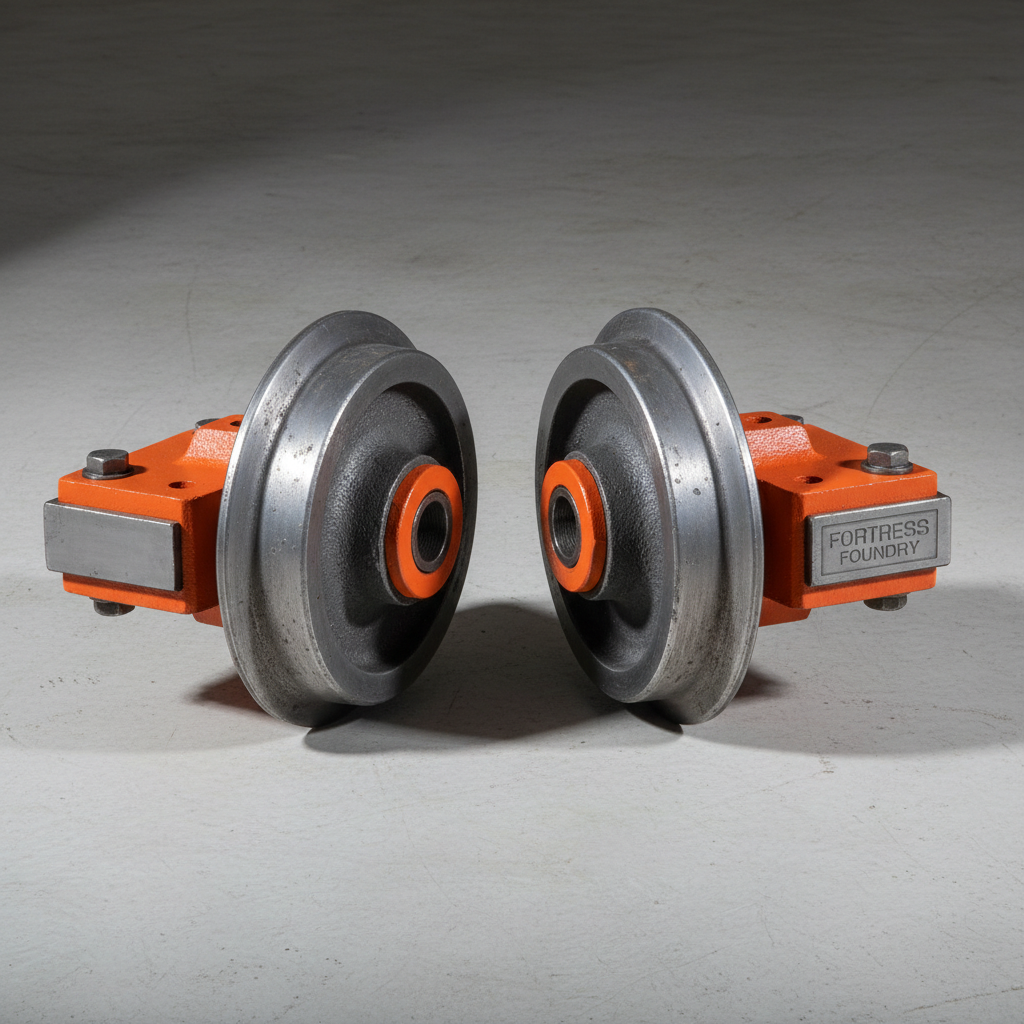
We also use a lot of polyurethane coatings for the wheels themselves. They reduce noise, protect against corrosion, and provide a smoother ride. But they’re not indestructible. UV light degrades them over time, so you need to re-coat them every few years.
Real-World Testing and Performance Evaluation
Forget the lab tests. They're useful for initial screening, but the real test is putting the wheels on a crane and letting it work. I prefer to run long-term field tests, several months at a minimum. You need to see how they perform under real-world conditions, with varying loads, temperatures, and humidity.
We also do a lot of visual inspections. Look for cracks, wear patterns, signs of corrosion. And we take regular measurements of the wheel diameter to track wear rates. We're using laser scanners now to get more precise readings. Later… Forget it, I won’t mention it.
Crane Wheel Supplier Performance Metrics
User Application and Practical Considerations
What’s interesting is how differently people actually use the cranes. Some are gentle, slow and steady. Others are… not. I saw one operator in Vietnam who basically treated the crane like a giant swing set. His wheels were shot within six months.
Maintenance habits vary wildly, too. Some sites are meticulous, greasing and inspecting everything daily. Others… well, let’s just say they wait until something breaks. It's frustrating, because proper maintenance could save them a lot of money in the long run.
Advantages, Disadvantages, and Customization Options
Advantages? Durability, obviously. A good set of wheels should last for years, even under heavy use. Low rolling resistance saves energy, and reduces wear on the motors. And a smooth ride is always appreciated by the operator. Disadvantages? Cost. High-quality wheels aren't cheap. And they can be a pain to replace, especially on older cranes.
We do a lot of customization. Last month, that small boss in Shenzhen who makes smart home devices insisted on changing the interface to , and the result was a week of troubleshooting before they realized it wasn't compatible with their existing system. It looked good on paper, though! We also do custom flange widths, hub diameters, and material coatings.
Case Study: A Shenzhen Client’s Customization Request
So, this guy, Mr. Li, runs a small factory producing robotic arms. He wanted ultra-precise wheels for a new crane he was building – something that could handle really delicate loads. He was adamant about using a specific type of ceramic bearing, even though it was significantly more expensive than the standard steel ones.
I warned him that it might be overkill, but he was convinced it would improve accuracy. We built the wheels to his specifications, and they worked…sort of. The accuracy was slightly better, but the ceramic bearings were incredibly brittle. They cracked within a few weeks. He ended up switching back to steel bearings.
It was a good lesson. Sometimes, the simplest solution is the best. And sometimes, the client is always right… even when they’re wrong.
Crane Wheel Supplier Analysis – Key Performance Indicators
| Supplier Name |
Lead Time (Days) |
Material Quality (1-5) |
Price Competitiveness (1-5) |
| ABC Crane Wheels |
30 |
4 |
3 |
| XYZ Crane Components |
45 |
5 |
2 |
| Global Crane Supply |
25 |
3 |
4 |
| Precision Crane Wheels |
35 |
4 |
3 |
| Reliable Crane Parts |
40 |
3 |
4 |
| United Crane Solutions |
20 |
5 |
2 |
FAQS
That's a tricky one, because it depends on so much – the load, the operating conditions, the maintenance schedule. But generally, a well-maintained crane wheel should last anywhere from 5 to 10 years. It's really about monitoring for wear and tear, and replacing it before it fails catastrophically. We usually recommend a thorough inspection every six months.
Don't just guess! You need to calculate the maximum load the crane will be lifting, including the weight of the load itself, the weight of the lifting attachment, and any dynamic forces. Then, add a safety factor, usually around 20-25%. Seriously, don't skimp on the safety factor. It could save lives.
Flanged wheels are generally more forgiving, especially if the track isn't perfectly aligned. They’re also simpler and cheaper. Rim-driven wheels offer lower rolling resistance and are better for high-speed applications, but they require a perfectly smooth, accurately aligned track. It’s a trade-off between simplicity and performance.
Minor surface damage can sometimes be repaired by grinding or machining. However, if there are cracks or significant deformation, the wheel should be replaced. It's not worth risking a failure. Trying to fix a cracked wheel is like putting a band-aid on a broken leg – it won’t hold.
Generally, a high-quality lithium-based grease is the way to go. It needs to be able to withstand high loads and extreme temperatures. The frequency of lubrication depends on the operating conditions. In a heavy-duty environment, you might need to grease the wheels weekly. In a lighter-duty environment, monthly might be sufficient. Check your manufacturer’s recommendations!
Definitely. We're seeing a lot of interest in composite materials, self-lubricating polymers, and smart wheels with embedded sensors. Also, there’s a push towards more sustainable manufacturing processes and materials. It's all about reducing weight, improving efficiency, and minimizing environmental impact.
Conclusion
So, ultimately, crane wheel technology isn’t glamorous, but it’s absolutely critical. It’s about selecting the right materials, designing for the application, and maintaining the equipment properly. There’s a lot of nuance, a lot of experience that goes into it.
And remember, whether this thing works or not, the worker will know the moment he tightens the screw. Because if it feels wrong, sounds wrong, or just looks wrong, it probably is. Don’t ignore that gut feeling. Visit our website at www.manufacturing-base.com to learn more about crane wheels suppliers.